A sushi menu looks like a list of fish. It is actually a list of shapes. Once you see the structure, the fish becomes the easy part.
1. Sashimi — fish, no rice
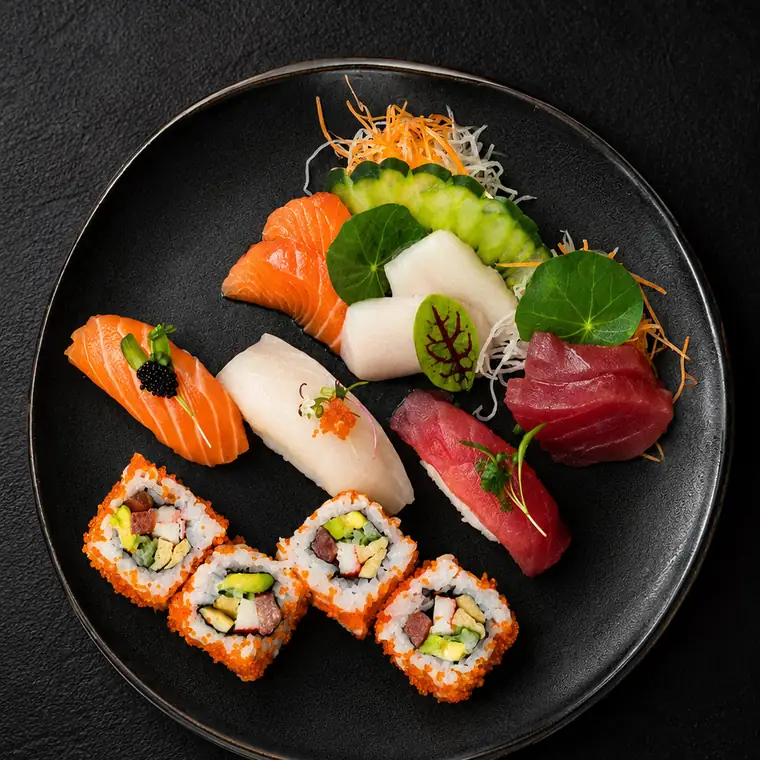
Sliced raw fish, served without rice. Usually sold in fives. This is where the quality of the sourcing is most exposed, because there is nothing to hide behind. Salmon belly (sake toro), fatty tuna (otoro) and white marlin are the common Bali cuts.
2. Nigiri — fish over pressed rice
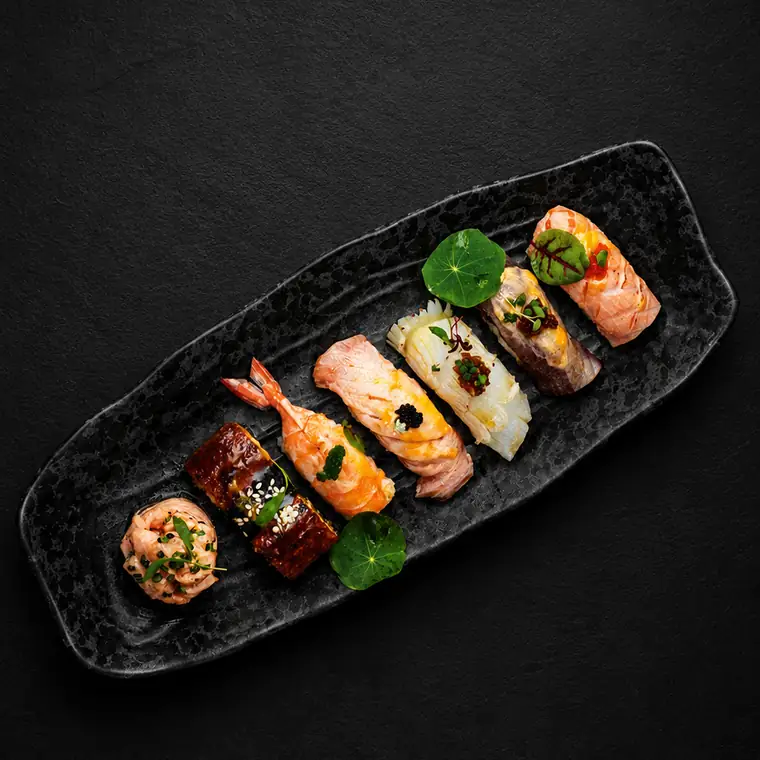
A hand-formed finger of seasoned rice with a slice of fish laid over it, usually two pieces to an order. A dab of wasabi lives between the fish and the rice; you generally do not need to add more.
One rule worth knowing: dip the fish, not the rice. Rice-first means the grain soaks the soy and falls apart. Turn the piece over and touch the fish to the soy.
3. Maki — rolled, nori outside
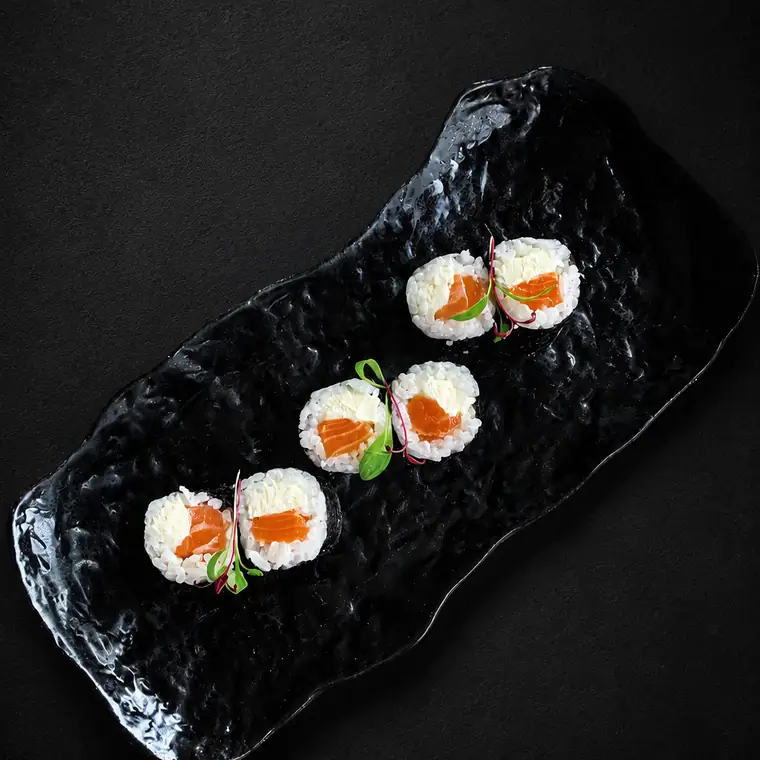
The classic roll. Nori on the outside, rice inside, one or two fillings. Kappa maki is cucumber; tekkamaki is tuna. Usually cut into six. Maki is deliberately simple — the whole point is one ingredient tasted clearly.
4. Uramaki — rolled, rice outside
The "inside-out" roll. Rice on the outside, nori hidden inside, and usually more going on: several fillings, a topping, a sauce. This is where fusion happens, and where most restaurants keep their signature. If a roll has a name rather than an ingredient list, it is almost certainly uramaki.
5. Gunkan — battleship
A base of rice with a collar of nori wrapped around it, making a small vessel. It exists to hold toppings that will not sit still: roe, chopped spicy tuna, sea urchin. Named for its resemblance to a warship hull.
6. Temaki — hand roll
A cone of nori filled with rice, fish and vegetables, rolled by hand and meant to be eaten immediately with your fingers. The nori softens quickly once it meets the rice, so eat it before you photograph it.
7. Aburi — torched
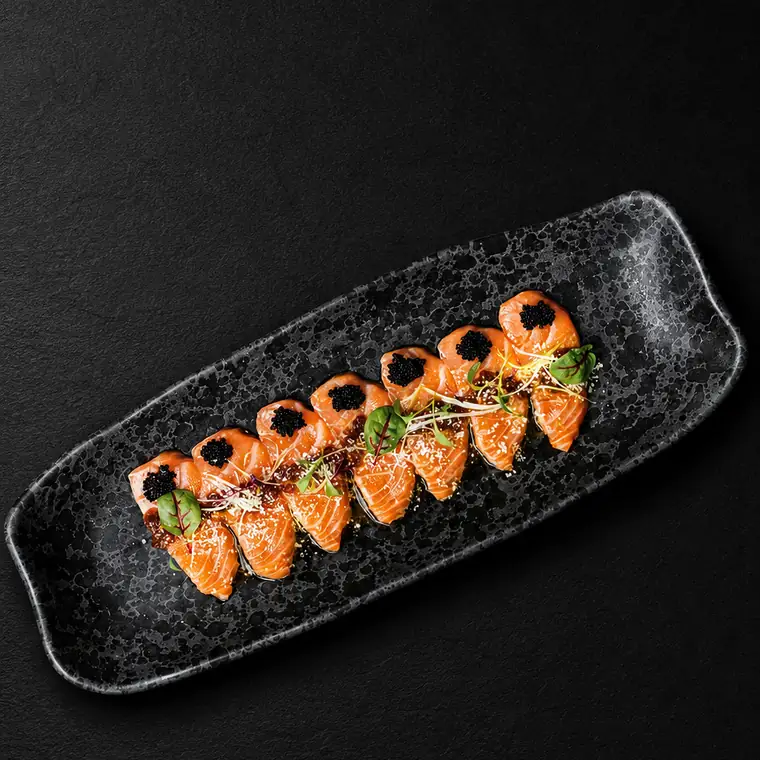
Not a shape but a treatment: the surface has been seared with a flame. It softens the fat, adds a light smoke, and changes salmon in particular quite dramatically. Any of the above can be aburi.
Putting it together
With those seven words you can read almost any Japanese menu in Bali without guessing. A reasonable order for two people looks like: one sashimi selection, one or two nigiri pairs, one simple maki, one signature uramaki, and something hot from the grill or the noodle section.
If you want the decision made for you, most kitchens offer a moriawase — a chef's combination plate. It is usually the best value on the raw side of the menu and it is the fastest way to work out what you like.